
Concrete lintel problems, signs of damage and repairs
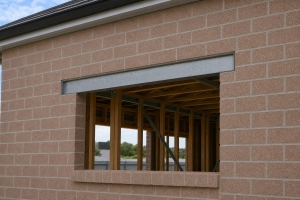
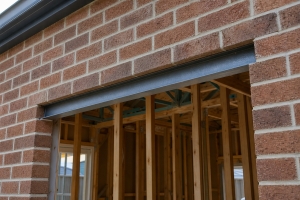
Concrete lintels are a widely used and are a reliable way to support masonry above doors, windows, and other wall openings. They are valued for their strength, durability, and compatibility with brick and block construction. However, concrete lintels can develop problems over time if they are affected by moisture, corrosion, movement, overloading, or poor installation.
Understanding the common signs of lintel damage and knowing when repair or replacement may be needed can help prevent more serious structural issues. Here’s what to keep in mind.
What are common problems with concrete lintels?
Concrete lintels can develop several issues over time, especially when exposed to weather, moisture, structural movement, or inadequate support conditions. The most common problems include cracking, spalling, rust staining, corrosion of embedded reinforcement, and sagging above openings.
Cracks above doors and windows are often the first visible sign that something is wrong. Some cracks may be minor and cosmetic, while others may point to movement, load issues, or deterioration within the lintel.
Spalling is another common issue. This happens when sections of concrete begin to break away, often because moisture has reached the reinforcing steel inside. As that steel corrodes, it expands and places pressure on the surrounding concrete.
In some cases, a concrete lintel may also begin to deflect or sag. That movement can lead to stepped cracking in brickwork, uneven gaps around windows and doors, or difficulty opening and closing them properly.
Why can concrete lintels fail over time?
Concrete lintels do not usually develop problems without a reason. Most issues are linked to site conditions, age, design limitations, or installation factors.
A lintel can lose performance over time if it is undersized for the span, carrying more load than intended, poorly supported at the ends, or exposed to ongoing moisture that causes corrosion in the reinforcement. Building movement and settlement can also contribute to cracking and stress around the opening.
In many cases, the real issue is not simply the lintel material itself, but the conditions around it. That is why proper product selection, correct installation, and suitable protection from moisture all matter.
How much weight can a lintel support?
There is no single answer to how much weight a lintel can support, because its capacity depends on several factors. These include the lintel material, dimensions, reinforcement, span, end bearing, and the amount of wall or structural load above the opening.
A small lintel over a narrow opening may support only a limited masonry load, while a larger lintel designed for a wider span may support much more. Because of that, lintel capacity should always be based on engineering design, manufacturer information, or the approved building system rather than visual guesswork.
If there is uncertainty about whether a lintel is adequate, it should be assessed before any repair or alteration is attempted.
Can concrete lintels be cut?
Concrete lintels should not be cut without proper structural consideration. Because they are load-supporting elements, cutting them can reduce their strength, damage embedded reinforcement, and compromise the opening they support.
In some cases, a structural redesign may allow an opening to be altered, but this should not be treated as a simple site modification. If a lintel needs to be changed, the safer approach is usually to assess whether a replacement lintel or a new support solution is required.
How to tell if a lintel needs replacing
A concrete lintel may need replacing if the damage is more than cosmetic and the structural performance of the element is no longer reliable.
Common warning signs include widening cracks above windows or doors, visible sagging, rust staining, exposed reinforcement, recurring movement, or chunks of concrete breaking away from the lintel surface. Sticking doors and windows can also indicate movement around the opening.
Not every crack means replacement is necessary, but where the lintel shows clear signs of deterioration or ongoing structural movement, replacement may be the more dependable long-term option.
Can a concrete lintel be repaired?
Some concrete lintels can be repaired where the damage is limited, and the lintel is still structurally sound. Minor localised defects, small non-structural cracks, and superficial surface damage may sometimes be treated with suitable repair materials.
However, if corrosion is advanced, cracking is significant, or the lintel is no longer performing structurally, repair alone may not be enough. In those cases, replacement is often the safer and more practical solution.
The important step is to identify whether the problem is cosmetic or structural before deciding how to proceed.
Repair vs replacement
Repair is generally better suited to minor, localised issues where the lintel remains sound and the underlying cause can be addressed. Replacement is more appropriate where damage is extensive, corrosion is advanced, or the original lintel no longer meets the structural demands of the opening.
The biggest mistake is treating a structural issue as a cosmetic one.
Conclusion
Concrete lintels are durable and widely used in masonry construction, but like any structural component, they can develop problems over time. The key is to identify the cause early and determine whether the lintel should be repaired or replaced.
If you have questions about concrete lintels, need help choosing a replacement lintel, or want support with estimating for your project, contact Statewide Building Materials. Our team can assist with product advice and help you find the right lintel solution for your build.
Contact Us: (08) 9399 3276