
SBP Perth Blog
-
- June 29, 2026
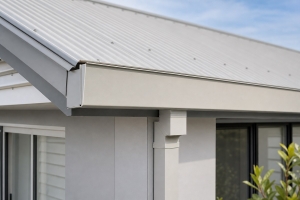
An eaves gutter is a gutter installed along the lower edge of a roof at the eaves to collect rainwater and direct it into the roof drainage system. It is a horizontal gutter running along the outside edge of a house roof. In Australian construction, eaves gutters are one of the most common gutter types used on residential buildings because they provide a practical and visible way to control roof runoff.
Eaves gutters are an important part of protecting the building envelope. Without them, rainwater would fall directly off the roof edge, which can lead to splashing, soil erosion, water staining, and unnecessary moisture around walls, paths, and footings.
Where does an eaves gutter sit on a roof?
An eaves gutter sits at the bottom edge of the roof where the roof slope ends. It is usually fixed along the fascia line or roof edge so that water running down the roof surface drops straight into the gutter channel.
This position is what makes the eaves gutter different from other roof
-
- June 25, 2026
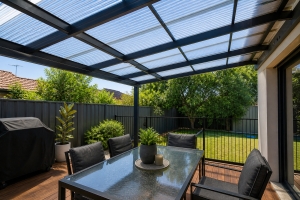
Clear roof sheeting is a popular way to bring natural light into outdoor areas without leaving them fully exposed to the weather. In Australia, it is commonly used over pergolas, patios, carports, walkways, and greenhouses. The most common clear roofing products are polycarbonate-based, although PVC, fibreglass, insulated systems, and glass can also be used depending on the application.
Clear roof sheets are often referred to as clear roof sheeting, polycarbonate roofing sheets, corrugated polycarbonate sheets, or transparent roofing sheets. In everyday use, many people also refer to them by brand names such as Suntuf and Laserlite, even though those are specific product ranges rather than generic material names.
The key to choosing the right sheet is understanding what you want the roof to do. Some people want maximum daylight, while others are more focused on heat reduction, durability, or cost. That is why clear roof sheeting is best thought of as a group of roofing options rather than
-
- June 23, 2026
A solid core door is a door with a dense internal core that is stronger, heavier, and better at reducing sound than a hollow core door. The centre of the door is filled with dense engineered material that gives the door more weight and rigidity. When opened and closed, it usually feels firmer and more substantial than a hollow core door, and it tends to resist knocks, dents, and everyday wear better.
In Australia, solid core doors are widely used in homes, apartments, and commercial buildings where durability and privacy are important. They are often chosen for bedrooms, studies, bathrooms, laundries, and other internal rooms.
They are popular because they sit between lightweight budget doors and solid timber doors, offering a practical balance of strength, performance, and value.
What are solid core doors made of?
In most cases, a solid core door is made with a dense engineered core and outer face materials that create the finished surface. The exact core construction can vary
-
- June 22, 2026
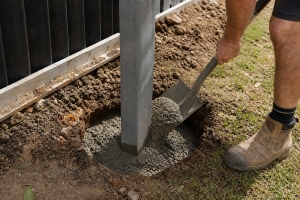
Rapid set concrete is a bagged concrete mix designed to harden faster than standard concrete products. It's a pre-blended mix of cement, sand, aggregate, and setting additives formulated to gain hardness quickly. In Australia, it is commonly sold as a 20kg dry mix that is mixed with water on site, often for quick jobs where speed of execution is important.
The key difference from standard bagged concrete is not that it’s formulated to set far faster. This feature is useful for jobs where you want a post, upright, or small footing to become stable quickly. At the same time, it requires a different level of skill and expertise to use as the installer has less time to adjust, finish, or rework the mix.
In construction, rapid set concrete is often used for posts, clotheslines, letterboxes, light footings, small repairs, landscaping projects rather than large conventional slabs or heavily engineered pours.
Are there different types of rapid set concrete?
Yes. In Australia, there are
-
- June 11, 2026
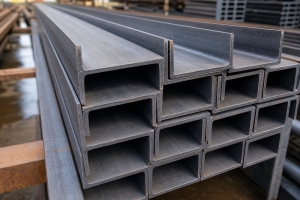
PFC steel is a common structural steel section used in residential, commercial, and fabrication work. The term PFC stands for Parallel Flange Channel, which describes a C-shaped steel member with parallel flanges.
What is a PFC in steelwork?
In steelwork, a PFC is a channel section rather than an I-beam or angle. It has a vertical web and two parallel flanges, which makes it useful where you need strength, a relatively compact profile, and easy connection to other building elements. We supply PFC channels for uses such as lintels, frames, and other structural applications, and they are available in mill finish or galvanised finish depending on the exposure conditions.
See all our structural steel products here.
What are the sizes of PFC steel?
PFC steel comes in a range of sizes, and the exact range available depends on the supplier. Our current range includes 100, 125, 150, 180, 200, 230, 250, and 300 PFC in galvanised finish, and 125, 150, 180, 200, 230, 250, and 300 PFC in mill finish.
-
- June 11, 2026
Barge flashing is the metal flashing fitted along the sloping edge of a gable roof, where the roof meets the outside edge of the wall or barge board. Barge flashing is what helps turn that roof edge into a weather-resistant detail rather than leaving it exposed.
Its purpose is to:
- protect the roof edge
- help direct water away from the structure
- support the finishing detail at the gable end
- improve the appearance of the roof perimeter
What is the difference between corner and barge flashing?
The two are related, but they are not the same.
Barge flashing is specifically used along the sloping gable edge of a roof. It is designed to protect that roof edge and cover the junction where the roof sheeting ends. A barge flashing may include folded corners as part of the installation.
Corner flashing usually refers to flashing used to protect an external or internal corner where two surfaces meet, such as cladding corners, parapet returns, wall junctions, or roof-to-wall transitions.
Can I put new
-
- June 09, 2026
Are you looking for an alternative to ceiling insulation at Bunnings? Are you trying to work out where to buy the right insulation for your project without choosing the wrong R-value, coverage, or product type?
For some jobs, a general retail option like Bunnings is good enough. But if you are insulating more than just one ceiling area, or you want help choosing the right product and quantity, a specialist supplier like Statewide Building Supplies can be a better fit.
Statewide Building Products supplies a wide range of ceiling insulation products to customers in Perth. Additionally we also sell acoustic insulation, building blankets, sisalation, thermal wall insulation, and protection solutions. It also offers estimating support for customers who are unsure how much to order.
What to look for when buying ceiling insulation
The first thing to check is the insulation’s R-value. This tells you how well the product resists heat flow. Higher R-values generally mean better thermal performance,
-
- June 04, 2026
Concrete lintels are a widely used and are a reliable way to support masonry above doors, windows, and other wall openings. They are valued for their strength, durability, and compatibility with brick and block construction. However, concrete lintels can develop problems over time if they are affected by moisture, corrosion, movement, overloading, or poor installation.
Understanding the common signs of lintel damage and knowing when repair or replacement may be needed can help prevent more serious structural issues. Here’s what to keep in mind.
What are common problems with concrete lintels?
Concrete lintels can develop several issues over time, especially when exposed to weather, moisture, structural movement, or inadequate support conditions. The most common problems include cracking, spalling, rust staining, corrosion of embedded reinforcement, and sagging above openings.
Cracks above doors and windows are often the first visible sign that something is wrong. Some cracks may be minor
-
- June 03, 2026
A lintel is a horizontal support placed above an opening in a wall, such as a door or window. Its purpose is to carry the load of the wall or structure above that opening and transfer it safely to the building elements on either side. Without a lintel, the material above the opening would not be properly supported, which can lead to cracking, movement, or structural failure over time.
Lintels are used in many forms of construction, especially where masonry, brick, block, stone, or other heavy wall materials sit above openings. While they are a basic structural element, many property owners do not notice them until they are planning a renovation, replacing windows, or dealing with cracks above a door or window.
What are lintels used for?
Lintels are used to bridge openings in walls and support the load above them. They are an essential part of construction. When a wall has a gap for a door or window, the lintel provides that support.
So, practically, lintels:
- carry wall loads above openings
-
- April 29, 2026
The colour of the roof not only changes the appeal of the home, but also influences heat absorption, how well it suits the walls and trims, and even how appealing it feels to future buyers. The right choice usually depends on various factors such as style preference, climate of the region, practicality, and long-term resale value.
Is roof colour important?
Yes. Roof colour is one of the biggest visual elements on a home, so it has a major impact on overall appearance. It can make a house look more modern, more traditional, softer, bolder, or more premium depending on the combination of roof, walls, gutters, fascia, and surrounding landscape.
In hot climates, roof colour can affect how much heat the roof surface absorbs. It’s not the only factor, but plays a big role alongside insulation, ventilation, roofing material, and orientation.
How to pick the colour of your roof
So how do you go about choosing a roof colour, without simply going at random and choosing whatever you find