
Should you choose a dark or light color for your roof?
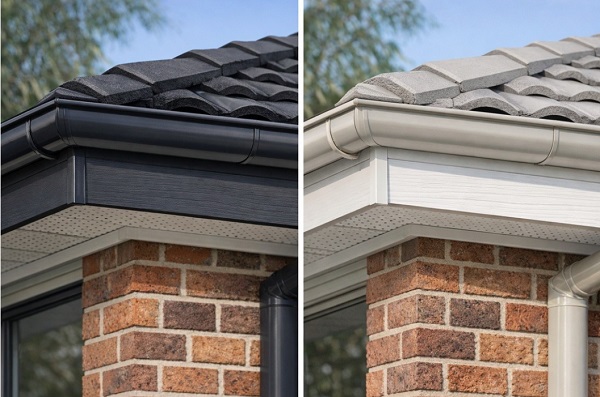
The colour of the roof not only changes the appeal of the home, but also influences heat absorption, how well it suits the walls and trims, and even how appealing it feels to future buyers. The right choice usually depends on various factors such as style preference, climate of the region, practicality, and long-term resale value.
Is roof colour important?
Yes. Roof colour is one of the biggest visual elements on a home, so it has a major impact on overall appearance. It can make a house look more modern, more traditional, softer, bolder, or more premium depending on the combination of roof, walls, gutters, fascia, and surrounding landscape.
In hot climates, roof colour can affect how much heat the roof surface absorbs. It’s not the only factor, but plays a big role alongside insulation, ventilation, roofing material, and orientation.
How to pick the colour of your roof
So how do you go about choosing a roof colour, without simply going at random and choosing whatever you find appealing. Start by looking at the following four things together:
- the wall colour and exterior finishes
- the climate
- the style of the home
- The duration you plan to stay in your house
If you want a safe long-term option, neutral roof colours are usually the best place to start. Greys, charcoals, muted browns, and off-whites tend to suit more homes than trend-driven colours.
Should the roof be lighter or darker than the house?
There is no fixed rule.
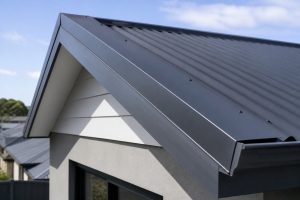
A darker roof can create contrast and give the home a grounded, defined look. If the house walls are light, a darker roof can add depth and structure.
A lighter roof can feel softer, brighter, and often more relaxed. If the walls are darker or warmer, a lighter roof may help balance the exterior.
In many Australian homes, the roof is slightly darker than the walls, but that is a design preference, not a requirement.
Is a dark or light roof better?
Neither is automatically better.
Light roofs are often better for reflecting heat. A light roof is usually a good idea in hotter climates where reducing heat absorption is a priority.
Dark roofs are often chosen for visual impact and a more contemporary appearance. A dark roof may better suit modern homes. Yet, it can absorb more heat and may show dust and fading more clearly over time.
What is the most popular roof colour in Australia?
In Australia, the most popular roof colours are usually neutral tones. Greys, charcoals, and earthy shades remain common because they suit a wide range of home styles. These colours also work well with popular exterior palettes such as white, beige, stone, and natural timber accents.
If you want a roof colour that feels timeless, neutral shades are usually the safest choice. They are less likely to date quickly and tend to have broader resale appeal.
What roof colour has the best resale value?
The best roof colour for resale is usually one that feels widely appealing rather than highly personal. As mentioned above, neutrals generally perform best because they suit more buyers and more exterior styles. A roof that works well with the rest of the house will usually add more value than a roof colour chosen in isolation.
If you are wondering what exterior colours make a house look expensive, the answer is usually a balanced palette rather than one single feature. Homes often look more premium when the roof, walls, gutters, fascia, windows, and driveway tones all working together rather than standing out.
What roof colour is best for a hot climate?
In general, lighter roof colours are better for hot climates because they reflect more sunlight and absorb less heat than darker colours. If your main goal is to keep the house cooler choose between lighter greys, off-whites, and other pale tones.
In terms of what colour roof keeps a house the coolest, the answer is usually a light-coloured roof with good solar reflectance. In Australia, this is especially relevant in hot and sunny regions.
Again, keep in mind that roof colour is only one part of thermal performance. There are many additional factors to consider.
Are darker roofs hotter?
Yes, generally darker roofs are hotter because they absorb more solar heat. That is the main drawback of dark roof colours. This applies whether the roof is charcoal, deep grey, black, or even dark brown. So yes, a brown roof can make a house hotter if it is a darker shade.
That does not mean dark roofs are a bad choice. Many homeowners still prefer them for style and contrast they offer. They can look great but keep other factors such as your climate and insulation in mind when choosing them.
What colour roof fades the least?
No roof colour is completely fade-proof, especially under strong Australian UV exposure. However, neutral tones often hide fading better than very dark colours. Extremely deep colours may show weathering easier over time, while very light colours can be more forgiving visually.
The actual lifespan of the roof depends more on the material, coating quality, installation, environment, and maintenance than on whether the colour is light or dark.
Conclusion
Choosing a roof colour is about more than looks. It specifically affects heat performance, visual appearance and potential resale value. Light roofs are often better for hot climates because they reflect more heat, while dark roofs can create strong contrast and a more modern look. Neutral colours are always a safe long-term choice.