
Colorbond fence costs and general FAQ
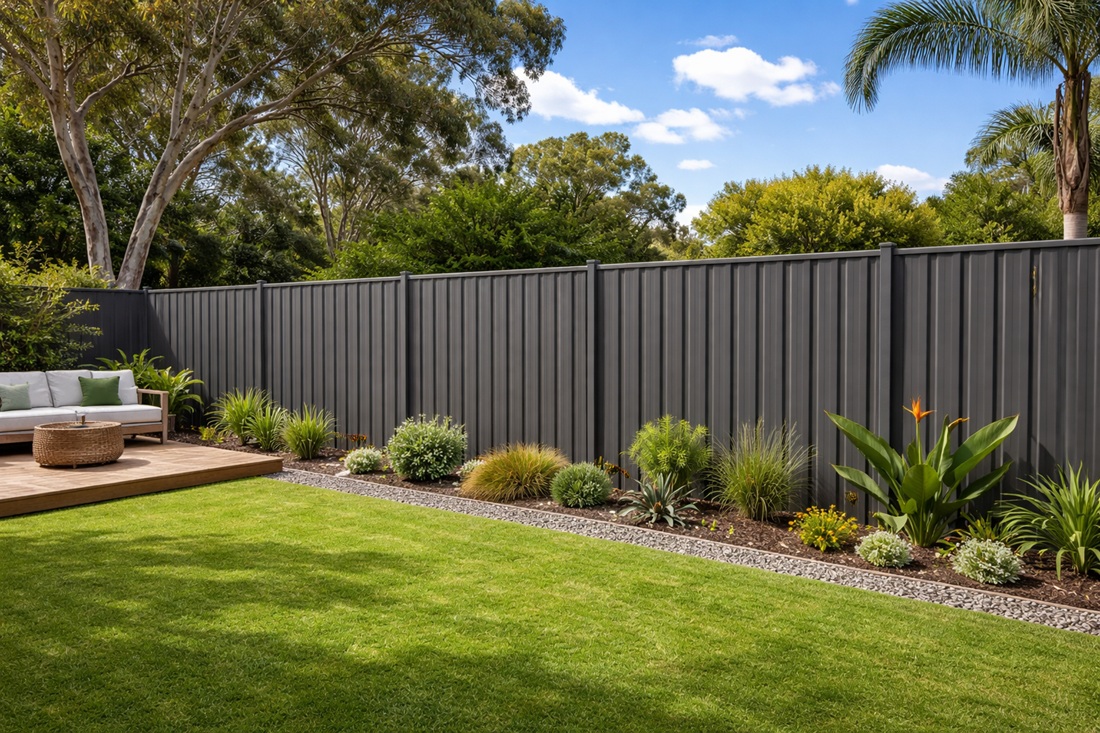
Colorbond fencing is one of the most popular fencing choices in Australia. It offers a clean, modern look, good privacy, low maintenance, and fits the Australian climate. Genuine COLORBOND® steel fencing is made by BlueScope, comes in a wide range of colours and profiles and looks good on both sides.
How much is a Colorbond fence?
It depends on whether you are pricing materials only or supply and installation. At Statewide Building Products, our Colorbond fence panel kits currently range from $90.89 for a 900 x 2365 mm panel, $127.56 for a 1500 x 2365 mm panel, $145.97 for a 1800 x 2365 mm panel, and $164.43 for a 2100 x 2365 mm panel. That works out to roughly $78–$101 per linear metre in material cost, depending on the panel width used.
Each fence panel kit includes:
2 x Fence Posts
2 x Fence Rails
2 x Fence Sheets
15 x Fence Teks
For a full project, installation pricing varies depending on the site. Based on current our panel kit pricing and average Perth fencing prices, a straightforward supply-and-install job is often around $95–$130+ per linear metre in total.
On a simple run, that suggests the installation component may be roughly $15–$45 per metre, but sloping ground, old fence removal, gates, difficult access, or extra site work can push the final cost higher.
How much would a 20 metre fence cost?
For a straightforward 20 metre run using mostly standard larger panel widths, material cost may land around $1,500–$1,600 in panel kits. It’s best to separate the job into three buckets: materials, installation, and extras. Extras are often what shift a quote the most.
Is Colorbond fence cheaper than timber?
Sometimes yes, sometimes no. Timber fences range from $75 to $300 per metre, while Colorbond is often quoted around $95 to $130+ per metre (installation included). In some circumstances, treated pine timber can be cheaper for material cost, but hardwood and more premium timber options can be much more expensive.
Keep in mind that timber might need painting, staining, repairs, and replacement of damaged palings over time, while COLORBOND® steel is promoted as a low-maintenance option that can last a long time and might not need replacement.
General FAQ
What is the best no maintenance fence? Is Colorbond fence a good option?
There is no such thing as a completely maintenance-free fence, but Colorbond is one of the closest options in Australian homes. It does not need the regular repainting, oiling, or replacement, has no risk of termites or rot, and is designed to resist corrosion when installed and maintained correctly. An occasional wash with clean water helps keep it looking tidy and can help maintain its appearance over time.
How long will a Colorbond fence last?
This depends heavily on location, installation quality, drainage and maintenance. They often note that the product lasts 20 to 30 years under normal conditions, while a warranty of up to 10 years is given on most COLORBOND® products.
In other words, if properly installed and looked-after, the fence should last for many years, but coastal exposure, trapped moisture, poor drainage, impact damage, or bad installation can shorten its life.
Do Colorbond fences rust?
Genuine COLORBOND® steel is designed with anti-corrosion technology and is tested for Australian conditions. It is built to resist corrosion rather than rust quickly like untreated steel. But that does not mean it is indestructible. Corrosion risk goes up when soil or mulch is built up against the fence, water ponds in the rail, debris is left trapped, or the fence is installed in severe marine or industrial conditions without the right procedures.
In summary, a genuine Colorbond fence that is installed correctly should resist rust very well, but poor drainage, constant moisture, chemical exposure, or the wrong environment can cause problems over time.
What are the common problems with Colorbond?
Most problems come down to installation, site conditions, or misuse rather than the material itself. Genuine COLORBOND® steel is widely used in Australia, made to relevant Australian Standards, and tested for Australian conditions. Common issues include poorly aligned posts, movement on sloping blocks, moisture trapped by soil or mulch against the base, poor drainage, chemical damage from garden sprays or fertilisers, scratches or dents, and trying to use the fence as a retaining wall when it is not designed for that purpose.
Another common issue is buying non-genuine coloured steel and assuming it is genuine COLORBOND® steel. BlueScope specifically recommends checking for laser branding on the fence panels, so you know you are getting the real product.
How to hide a Colorbond fence
This sounds like a strange question, but some might want to soften the look of a Colorbond fence. The best option is utilizing landscaping in front of it. The one thing to avoid is building soil, mulch, or garden fill up against the base of the fence. That can trap water and increase the risk of corrosion at the lower rail and posts.
What is the most popular Colorbond fence colour?
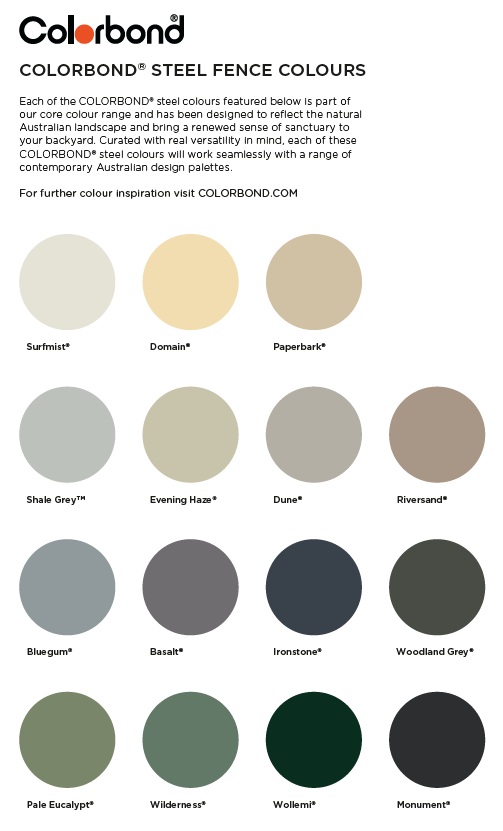
There is no single “best” colour for every home, but darker neutrals are clearly among the most popular current choices. Paired with bright and dark green landscaping the contrast looks amazing on nearly any home. Shades such as Monument, Basalt, and Woodland Grey are often in high demand. Softer colours like Surfmist, Shale Grey, and Paperbark are also popular with homeowners who want a lighter or more natural look.
See the latest Colorbond fencing colors available in the image below:
Does Bunnings sell COLORBOND?
Yes. Bunnings Australia does list COLORBOND® fencing-related products, although ranges and availability can vary by store. You can contact our team at Statewide Building Supplies for all your fencing needs and more!
You can call us here: (08) 9399 3276
Conclusion
If you want a fence that is modern, private, low maintenance, and widely used across Australian homes, Colorbond remains one of the best options. The biggest mistake when it comes to cost is assuming there is one fixed “cost per metre” that applies to every property. Your final price depends on product choice, site conditions, access, labour, and compliance requirements.