
Can I Install a Colorbond fence myself?
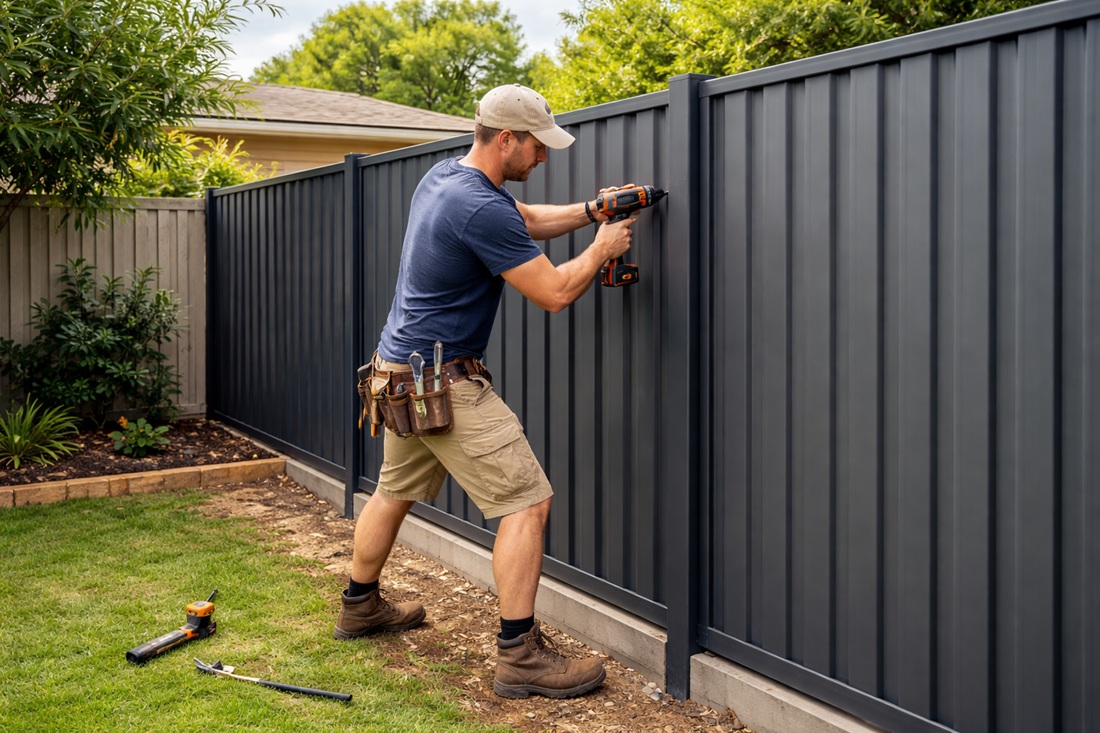
Yes, often you can, especially if it’s a straight run on level ground, you are confident with set-out and concrete footings, and you have already checked for underground services.
Installing a fence with slopes, corners, tight boundaries, gates, retaining work, or compliance requirements is something completely different. Here, even small mistakes matter and can end up costing you more if not done right. In these circumstances, it is usually best to hire a professional fence installer.
How long does it take to put up a Colorbond fence?
For a standard residential job, it can take anywhere from one to three days, but the timeline depends heavily on fence length, ground conditions, access, old fence removal, and whether extra reinforcement or gates are involved.
A simple boundary fence on flat ground is obviously quicker than a project on a sloping block or a site that needs demolition, retaining work, or extra preparation. Also keep in mind, a professional crew will probably work much faster than you doing a DIY job.
See all our fencing products here.
What is the best time of year to install a fence?
There is no single best time of year, but in general, dry and settled weather is often easier because fencing work depends on digging, concrete footings and site access. If this is done in wet conditions it might delay work or even lead to mistakes, but most certainly increases complexity of the job.
From a homeowner point of view, the best time is usually when the ground is manageable, access is clear, and you have enough dry weather to measure, dig, set posts, and keep the job moving without rushing.
Additional FAQ
How wide is a Colorbond fence panel?
At Statewide Building Products our Colorbond fence panels are available in multiple widths, typically 900 mm, 1500 mm, 1800 mm, and 2100 mm, with a standard height of 2365 mm.
If you’re wondering how many fence panels you need, be sure to read our article over here.
Regulations, neighbours, and approvals
Before you install anything, check the following:
-whether the fence is a dividing fence on a shared boundary,
-whether your neighbour needs to be consulted,
-whether your local council has restrictions on height, front fencing, corners, or retaining situations.
Many boundary fences may be straightforward, but councils can have stricter rules for front fences, corner blocks, brick or masonry fences, and anything tied to visibility or special site conditions.
Read our full article on fencing regulations here.
Final word
Installing a Colorbond fence yourself can be a good option for a simple project, but proper planning is essential. Before ordering materials, make sure you have measured the fence line accurately, worked out how many panels you need, and checked any local fencing regulations that may apply. Getting these basics right early will help you avoid delays, extra costs, and mistakes during installation.