
What is PFC steel?
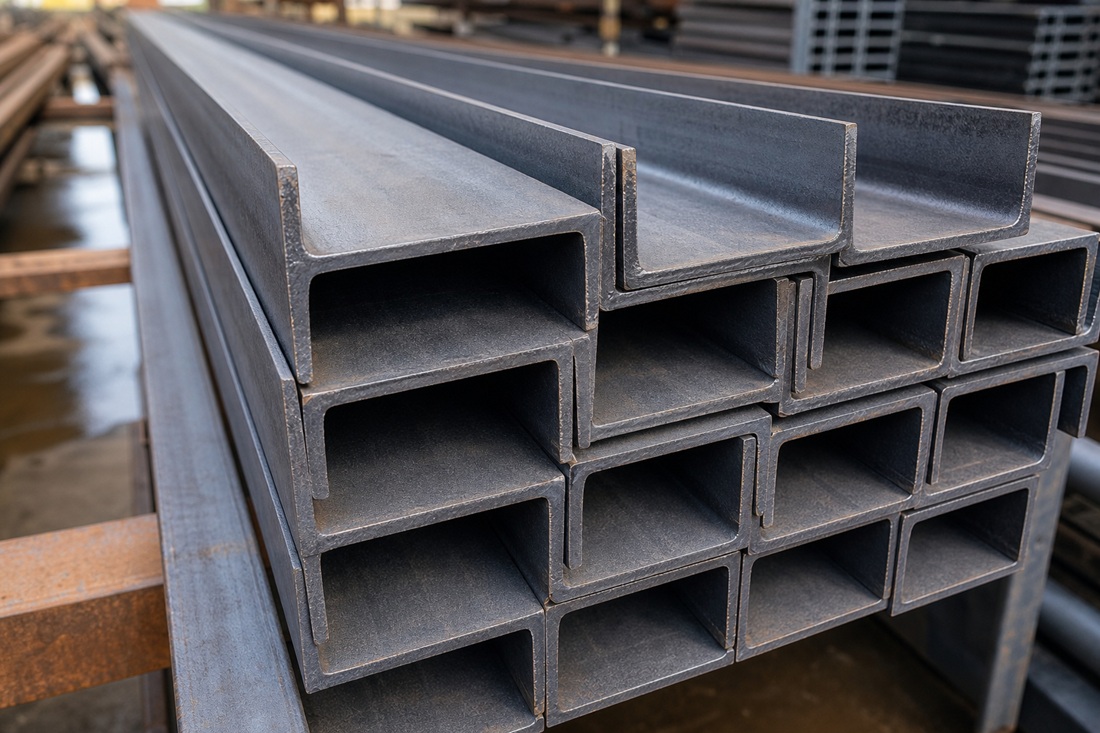
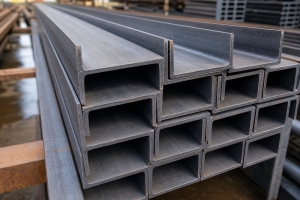
PFC steel is a common structural steel section used in residential, commercial, and fabrication work. The term PFC stands for Parallel Flange Channel, which describes a C-shaped steel member with parallel flanges.
What is a PFC in steelwork?
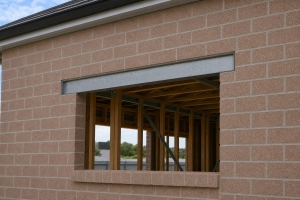
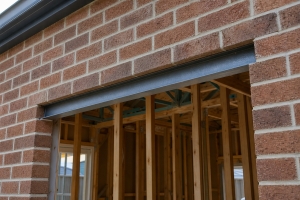
In steelwork, a PFC is a channel section rather than an I-beam or angle. It has a vertical web and two parallel flanges, which makes it useful where you need strength, a relatively compact profile, and easy connection to other building elements. We supply PFC channels for uses such as lintels, frames, and other structural applications, and they are available in mill finish or galvanised finish depending on the exposure conditions.
See all our structural steel products here.
What are the sizes of PFC steel?
PFC steel comes in a range of sizes, and the exact range available depends on the supplier. Our current range includes 100, 125, 150, 180, 200, 230, 250, and 300 PFC in galvanised finish, and 125, 150, 180, 200, 230, 250, and 300 PFC in mill finish.
A few examples from our product listings show how the size naming works:
- 125 PFC = 125 mm height x 75 mm width, 13.40 kg/m
- 150 PFC = 150 mm height x 75 mm width, 17.70 kg/m
- 180 PFC = 180 mm height x 75 mm width, 20.90 kg/m
- 200 PFC = 200 mm height x 75 mm width, 22.90 kg/m
- 230 PFC = 230 mm height x 75 mm width, 25.10 kg/m
How much does PFC steel weigh per meter?
PFC steel weight per metre depends on the section size. Smaller channels weigh less, and larger channels weigh more because they contain more steel. If you need total weight for transport or estimating, multiply the section weight by the length. For example, a 6 metre length of 150 PFC at 17.70 kg/m weighs about 106.2 kg. This is an arithmetic calculation based on the listed section mass.
How does PFC steel compare to other steel?
PFC steel sits somewhere between angle sections and larger beam sections in terms of how it is commonly used. Compared with an angle lintel, a PFC gives you a deeper, more rigid channel profile. Compared with a universal beam, a PFC is often more compact and easier to integrate where a full I-section is unnecessary.
- use PFC when you want a versatile channel section for support, framing, or lintel-type applications
- use a universal beam when the design calls for a more conventional beam section for heavier spanning work
- use angle lintels where the job specifically suits a simpler angle support arrangement
The correct choice should still come from the engineer’s design or the structural schedule.
What is PFC 150?
PFC 150 usually means a parallel flange channel with a nominal depth of 150 mm. Our PFC 150 is 150 mm high, 75 mm wide, with a mass of 17.70 kg/m.
Are 125 and 150 flanges the same?
Not entirely. The 125 PFC and 150 PFC are not the same section overall because their depth and weight are different. PFC 125 is 125 mm high, 75 mm wide, and has a mass of 13.40 kg/m.
How to tell if a flange is 150 or 300?
The easiest way is to look at the height. PFC 150 is 150 mm high, while PFC 300 is 300 mm high.
Mill finish vs galvanised PFC
When choosing a PFC, finish matters as well as size. We supply both mill finish and galvanised PFC channels. Mill finish sections are untreated and typically used where a galvanised coating is not required, while galvanised PFCs are suited to external or exposed environments because of their corrosion resistance.
Conclusion
If you have any additional questions regarding PFC steel or the different options we have available, be sure to contact our sales team today.
(08) 9399 3276