
What are laundry doors and general FAQ
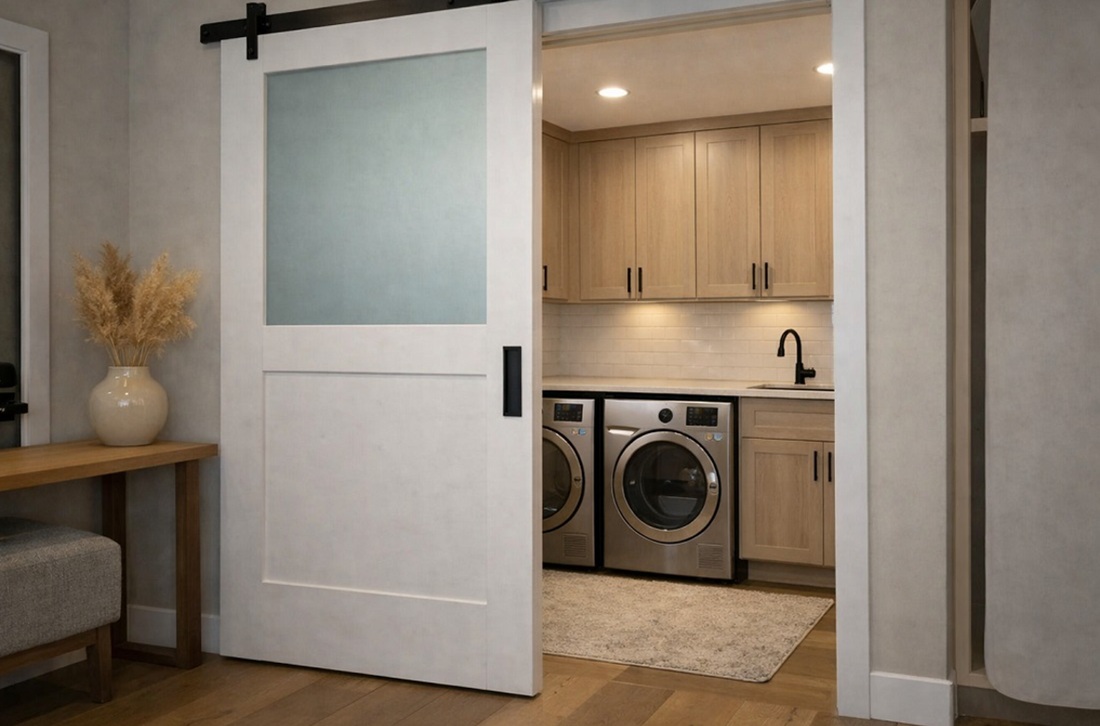
A laundry door is the door that closes off your laundry room and separates it from the rest of the house. In some homes it is a normal door, while In others it’s a sliding door, bifold door, barn door or even a cupboard-style door that hides the washer and dryer. As you can see, there are many options available to laundry doors. Here we’ll go through each of them and show you when they are good and when not.
Why have a laundry door?
A laundry door helps create a practical work zone for laundry and cleaning from the rest of the home. Here are some pros and cons to consider.
Pros of having a laundry door
A laundry door can be of great benefit to any household. It can help:
- hide appliances like washing machines, dryers, freezers and even cleaning products
- tidy up the entire house by keeping laundry and mess in one location
- reduce noise from washing machines and dryers
- contain heat, moisture and odors
Cons of having a laundry door
In general, there are very few cons regarding having a laundry door, more some considerations:
- It takes up space, especially a hinged swing door which can be an issue in small homes
- Depending on which way the door opens, it can restrict access to the laundry room compared to not having a door at all
- Certain door styles offer less acoustic control
- Glass doors look modern but don’t do much for privacy unless they are frosted
- Custom doors can cost more and are not always needed
- It can block ventilation if the room is designed poorly
See our wide selection of doors and frames over here.
FAQ
What is the standard laundry door size?
There is no single universal size, but a standard laundry door is often similar to other internal doors in the home. In Australia, common door heights are around 2040mm, with common widths such as 720mm, 770mm, 820mm and 870mm depending on the opening and the house style.
The best door size for a laundry room depends on factors such the room layout, appliance access and whether it needs to meet accessibility requirements.
What is the minimum size for a laundry room door?
There is no one-size-fits-all answer. The minimum practical door size should be large enough to:
- move appliances through comfortably
- allow safe access
- suit the wall and frame
- meet any local code or project-specific requirements
What is the standard laundry door height?
In most homes, the laundry room door height matches that of internal doors at a height of 2040mm. External doors may differ depending on the system used.
What is the standard laundry door width?
Common widths often align with standard residential door widths. However, if the laundry is tight or appliances are large, a wider opening may make installation and future replacement much easier.
For some laundry rooms, bifold, sliding or double doors are often used to create a wider access opening even when the footprint is small.
Is a 720mm external laundry door enough?
A 720mm external laundry door can work in some homes, but it may feel tight depending on appliance and room size.
Do laundry room doors need vents?
Not always. A vented laundry room door can help if the space is enclosed and airflow is limited, especially for cupboard laundries or setups with dryers. If the room already has adequate ventilation, a vented door may not be necessary. The trade-off is that vented doors usually make more noise through.
Should a laundry room door open in or out?
It depends on the available space. In many small laundries, an inward-swinging door won’t work well. An outward swing, sliding door or pocket door may be more practical. The best choice is the one that gives safe clearance and easy use without blocking movement.
Should the laundry room door be open or closed?
If noise, clutter or pets are an issue, keeping it closed usually makes sense. If moisture and heat build up easily, you may want it open at times unless the room has good ventilation.