
How thick is plasterboard – a guide for Australia
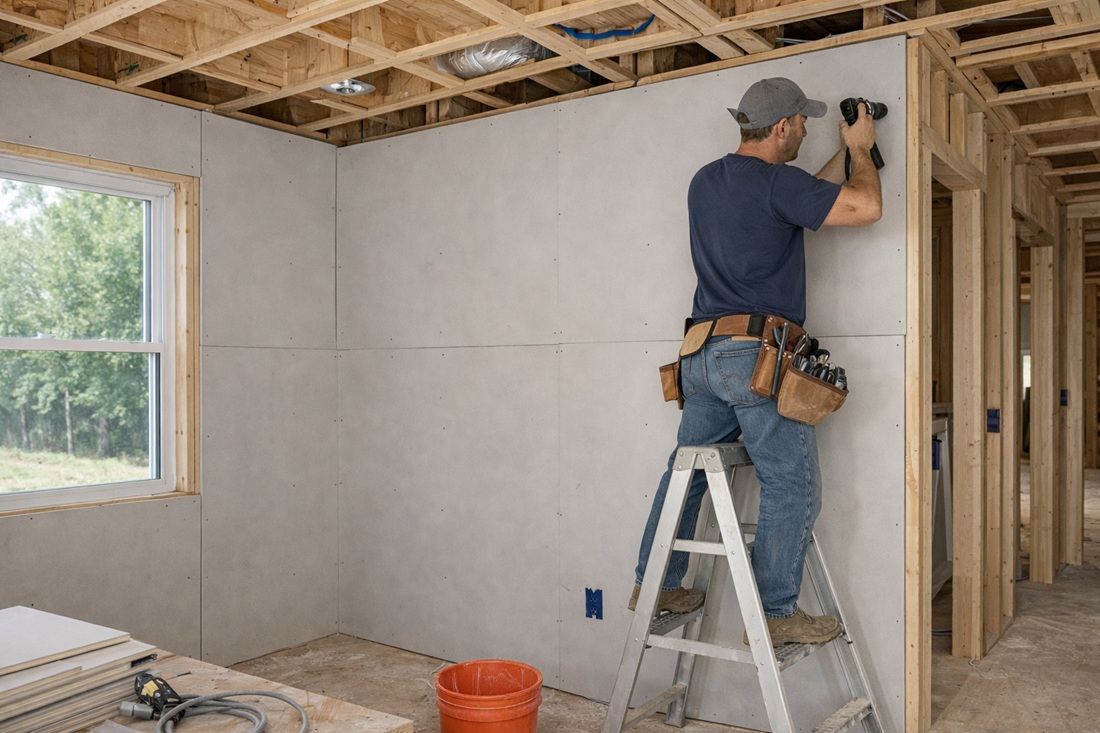
Plasterboard thickness in Australia depends on where it’s installed. Walls vs ceilings, framing spacing, impact resistance, acoustic performance, fire performance, moisture resistance – all these variables will influence thickness.
In most residential work, you will commonly see 10 mm and 13 mm boards, with thicker options used where the system requires it.
What thickness is plasterboard
Here’s a practical guide to the plasterboard thicknesses:
| Thickness | Typical use | Notes |
|---|---|---|
| 6.5 mm | Curved work | Flexible boards are commonly made in thinner sizes. |
| 10 mm | Residential walls, ceilings | Standard thickness for homes, but ceiling suitability depends on framing and product type. |
| 13 mm | Walls and ceilings where extra strength is needed | Often used in commercial work and in systems needing a more robust lining. |
| 16 mm | Fire, acoustic, or high-durability systems | Used when the wall or ceiling system calls for it. |
How thick is standard plasterboard
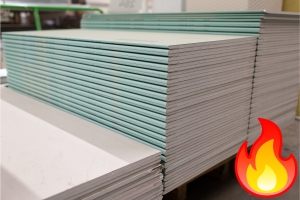
Standard plasterboard such as those being sold on our online store refers to the common general-purpose boards used for internal linings. In Australia, standard boards are widely sold in 10 mm and 13 mm thicknesses and used for walls.
Use 10 mm for standard residential wall lining jobs
In Australia, 10 mm ceiling boards are common and there are products specifically marketed for ceiling use at 10 mm.
Use 13 mm when you want better stiffness
13 mm ceilings are used where extra stiffness is desired, or where the ceiling system design calls for it. Ceilings are more sensitive to thickness because sag and joint visibility show up over time if the system is under-designed.
How thick is Gyprock plasterboard?
Gyprock plasterboard commonly comes in 10 mm and 13 mm, with other thicknesses available in certain product ranges and systems. For example, Gyprock ceiling board products are commonly 10 mm and are available in multiple widths and long lengths.
What size does plasterboard come in?
Plasterboard size is usually described by width x length and then thickness.
In Australia, common widths include 1200 mm, with 1350 mm also widely used, and some ceiling boards available in 900 mm, 1200 mm, and 1350 mm.
Lengths vary widely. Many ranges run from around 2400 mm up to 6000 mm depending on product and supplier.
How heavy is plasterboard?
Plasterboard weight depends on thickness and the specific product’s mass per square metre.
One example from an Australian product data sheet: a 10 mm board can have a mass around 8.5 kg/m² - depending on the product.
To estimate sheet weight:
- Calculate sheet area in square metres.
- Multiply by the board’s mass (kg/m²).
Example using (8.5 kg/m²):
1200 x 2400 sheet area (= 1.2 x 2.4 = 2.88m²)
Estimated weight (= 2.88 x 8.5 = 24.5kg).
1200 x 3600 sheet area (= 1.2 x 3.6 = 4.32m²)
Estimated weight (= 4.32 x 8.5 = 36.7kg).