
What is Fire rated plasterboard?
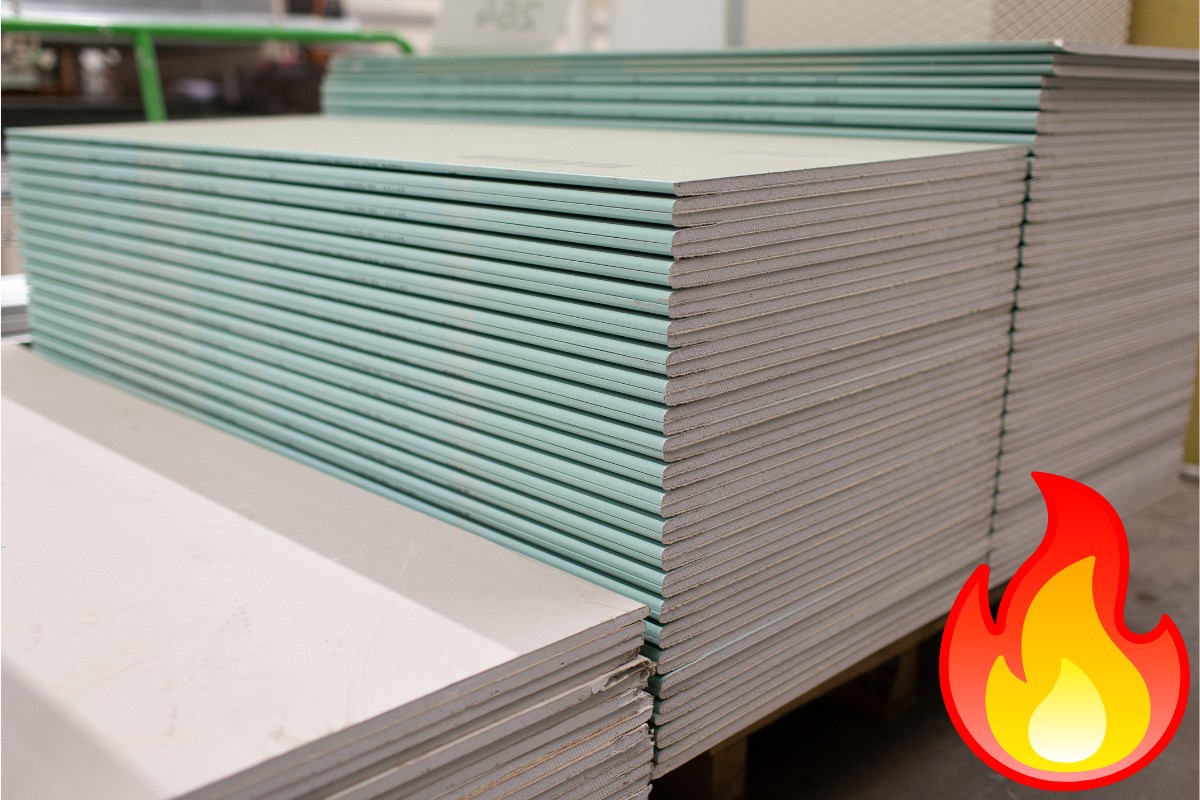
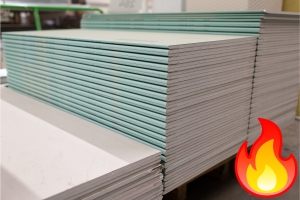
Fire rated plasterboard is a type of plasterboard used in wall and ceiling systems that need to resist fire for longer than a standard lining. In Australia, it is commonly specified where the building design, NCC requirements, or construction systems call for improved fire performance. These include intertenancy walls, garage walls, service areas, and fire-separated parts of a building.
Fire rated plasterboard is still a gypsum-based board, but it is designed and tested for use in fire-resistant systems. The key point is that a fire rating does not come from the board alone. It comes from the complete tested wall or ceiling system, which may include the board type, thickness, framing, insulation, fixings, joint treatment, and number of layers.
Is gypsum board fire resistant?
Gypsum board has natural fire-resistant properties because gypsum contains chemically bound water, which helps slow heat transfer during a fire. This is one reason plasterboard performs better in fire than many untreated lining materials.
However, this does not mean every gypsum board is automatically a Fire rated board. Standard plasterboard has some inherent fire resistance, but Fire rated plasterboard is specifically formulated and used as part of systems designed to achieve a documented fire performance.
Is normal 12.5 mm plasterboard fire rated?
Not necessarily. A standard 12.5 mm plasterboard sheet is not automatically fire rated just because of its thickness.
This is a common misunderstanding. Thickness alone does not make a board fire rated. Some Fire rated systems may use boards around this thickness, but that is very different from saying that all 12.5 mm plasterboard is fire rated.
What is the difference between Fire rated and regular plasterboard?
Regular plasterboard is designed for general wall and ceiling lining. Fire rated plasterboard is designed for use in systems that must provide a higher level of fire resistance. It may have a different core formulation, higher density, or specific performance characteristics intended to help a tested wall or ceiling system resist fire for longer.
How to tell if plasterboard is fire rated
The best way to tell whether plasterboard is fire rated is to check the product identification and manufacturer documentation, rather than relying on appearance alone.
A Fire rated board is usually identified by:
- product markings on the sheet
- packaging labels
- manufacturer product names
- technical data sheets
- tested system documentation
Some fire-resistant plasterboards are also colour coded, but colour is not a reliable identification method on its own because it can vary between manufacturers and product ranges.
How thick is Fire rated plasterboard?
There is no single thickness that defines Fire rated plasterboard. The correct thickness depends on the product and the tested wall or ceiling system. While thicker boards can improve fire resistance, the rating comes from the full tested assembly, not the sheet thickness alone. If a Fire rated system is required, the board thickness must match the tested specification rather than a general rule of thumb.
Do two layers of plasterboard improve fire rating?
Two layers of plasterboard can improve fire resistance, but they do not automatically create a certified fire rating on their own. If two layers are required, they must form part of a tested and specified system. Simply doubling up sheets without matching the tested assembly does not guarantee compliance.
Conclusion
Fire rated plasterboard is used when a wall or ceiling system needs to resist fire for longer than a standard plasterboard lining. While gypsum board naturally offers some fire resistance, a true Fire rated result comes from the complete tested system, not from the board alone.
That is why selecting the right product is only one part of the process. Thickness, framing, layers, insulation, fixings, sealants, and installation details all play a role in achieving the required fire performance.