
What is an eaves gutter?
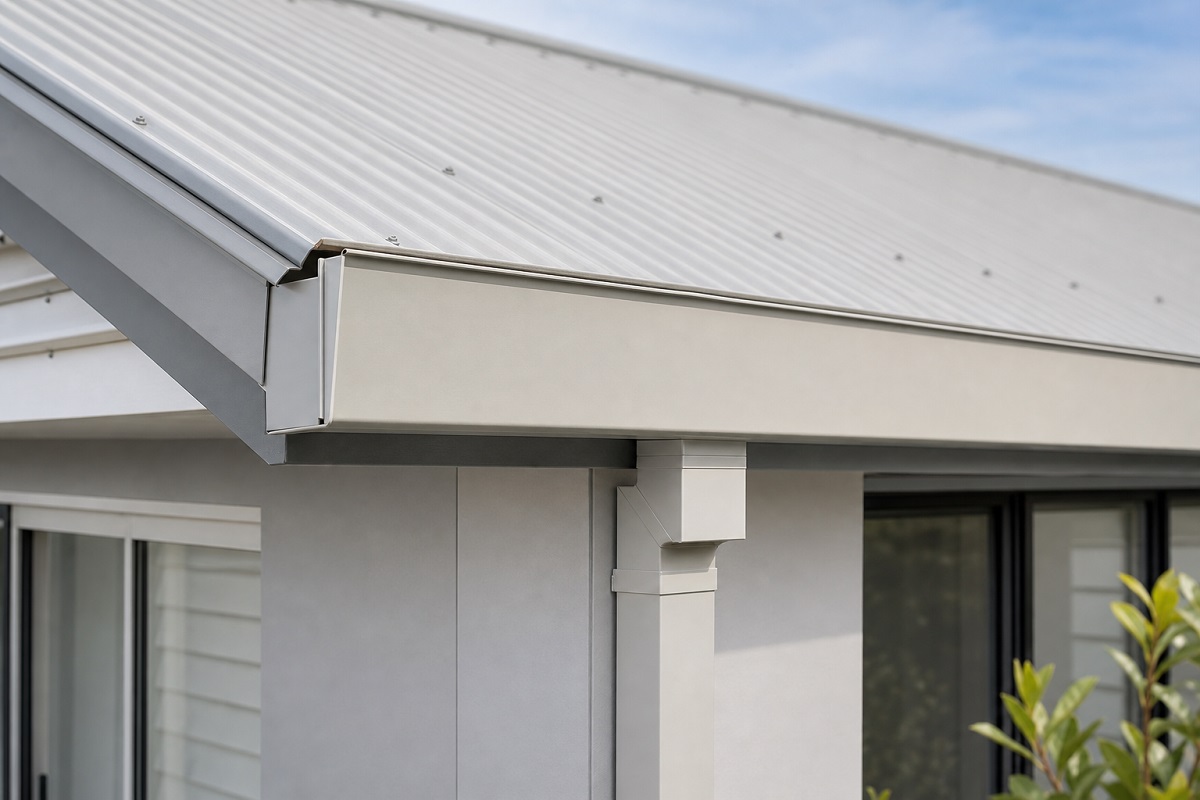
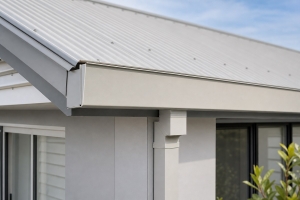
An eaves gutter is a gutter installed along the lower edge of a roof at the eaves to collect rainwater and direct it into the roof drainage system. It is a horizontal gutter running along the outside edge of a house roof. In Australian construction, eaves gutters are one of the most common gutter types used on residential buildings because they provide a practical and visible way to control roof runoff.
Eaves gutters are an important part of protecting the building envelope. Without them, rainwater would fall directly off the roof edge, which can lead to splashing, soil erosion, water staining, and unnecessary moisture around walls, paths, and footings.
Where does an eaves gutter sit on a roof?
An eaves gutter sits at the bottom edge of the roof where the roof slope ends. It is usually fixed along the fascia line or roof edge so that water running down the roof surface drops straight into the gutter channel.
This position is what makes the eaves gutter different from other roof drainage components. It is not hidden within the roof structure like a box gutter, and it is not located in an internal roof junction like a valley gutter. It sits on the outer edge of the roof and forms the most visible part of the roof drainage system.
What is the purpose of an eaves gutter?
The purpose of an eaves gutter is to catch water from the roof and control where it goes next. That may sound simple, but it is an essential part of keeping the building dry and preventing unnecessary wear around the perimeter.
An eaves gutter helps to:
- collect roof runoff
- direct water toward drainage points
- reduce splashback against walls
- protect footings and surrounding ground
- improve the overall roof drainage layout
How is an eaves gutter different from other gutter types?
An eaves gutter is different because of where it is installed and the role it plays at the roof edge.
A valley gutter sits where two roof surfaces meet and drains water from an internal roof angle. A box gutter is usually concealed within the roof or behind a parapet and is often used on commercial buildings or more complex roof designs. A fascia gutter is integrated into the fascia detail and can create a more streamlined roof-edge appearance.
By comparison, an eaves gutter is the more traditional external gutter fixed along the edge of the roof. It is widely used because it is straightforward, visible, and practical for many residential roof types.
What holds an eaves gutter in place?
An eaves gutter is held in place by gutter brackets or clips fixed to the fascia. These brackets are designed to support the weight of the gutter itself, as well as the water it carries during rainfall.
The support system does more than just hold the gutter up. It also helps maintain the correct fall so water flows efficiently toward the drainage point. If the brackets are poorly spaced, fixed incorrectly, or begin to fail over time, the gutter can sag, overflow, or pull away from the roof edge.
For that reason, the bracket type, spacing, and installation method are just as important as the gutter profile itself.
What are the common types of eaves gutter profiles?
There is not just one eaves gutter shape. Several profiles are commonly used in Australia, and the choice often depends on the style of the building, the required water capacity, and the preferred appearance.
Common eaves gutter profiles include:
- quad gutters
- square-front gutters
- half-round gutters
A quad gutter is a classic profile often seen on traditional homes. Square-front gutters are popular on modern homes where a cleaner, more architectural look is preferred. Half-round gutters are often selected for a softer, more decorative appearance.
Although the profile affects how the gutter looks, it can also influence water capacity, compatibility with fascia details, and how the roof edge is finished.
When should you choose an eaves gutter?
An eaves gutter is usually the right choice when you want a conventional roof-edge gutter that is practical and suitable for common residential roof designs.
It is often chosen for homes where:
- the roof design allows an external gutter line
- easy inspection and maintenance are important
- the gutter is intended to remain visible as part of the roofline
- a straightforward drainage solution is preferred
The final choice should still consider the roof catchment area, expected rainfall intensity, roof pitch, and the visual style of the home. A gutter that looks right but is undersized for the roof area can create overflow problems in heavy rain.
Common problems with eaves gutters
Like any exposed roof drainage component, eaves gutters can develop problems if they are poorly installed, undersized, blocked, or allowed to deteriorate over time.
Common issues include sagging, overflowing, blocked sections, corrosion, and poor water flow caused by incorrect fall. In some cases, the problem is not the gutter profile itself but debris build-up or bracket failure. In other cases, the gutter may simply not have enough capacity for the roof area and rainfall conditions.
Because eaves gutters are exposed and accessible, they are often easier to inspect than more concealed gutter types. Visibility is one of their advantages, but it also means maintenance should not be ignored.
Conclusion
An eaves gutter is the gutter fixed along the outer edge of the roof at the eaves to collect and control rainwater runoff. It is one of the most common gutter types used in Australian homes because it is practical, visible, and well suited to many residential roof designs.
The key to having an eaves gutter perform as it should is not just choosing a profile that looks right. It is also about making sure the gutter is properly supported, correctly sized for the roof area, and installed so water can flow where it needs to go. When those factors are right, an eaves gutter becomes a reliable part of protecting the building from water damage.