
What is rapid set concrete?
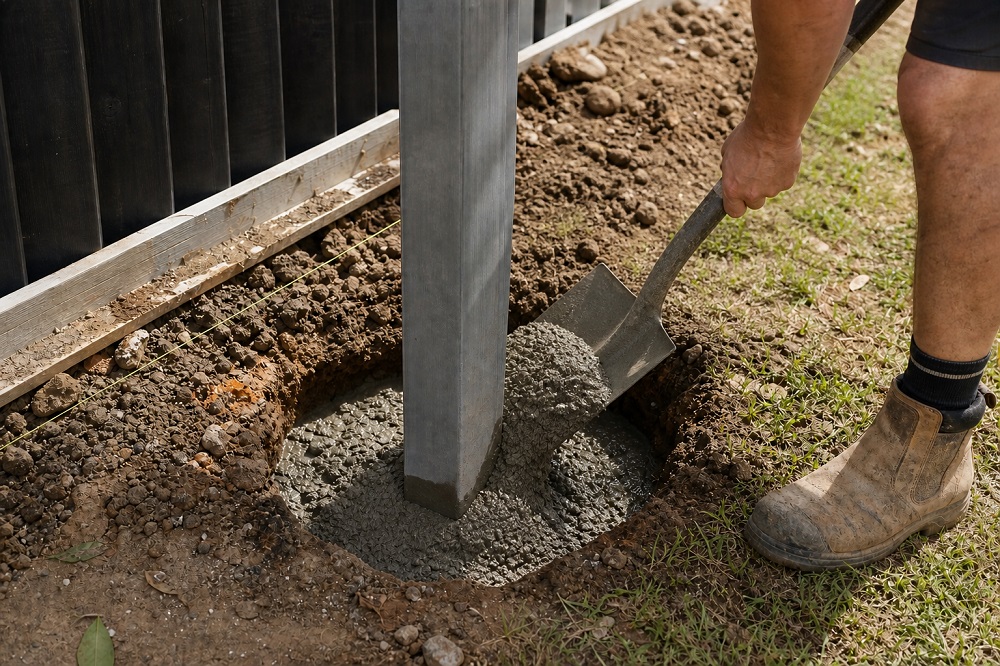
Rapid set concrete is a bagged concrete mix designed to harden faster than standard concrete products. It's a pre-blended mix of cement, sand, aggregate, and setting additives formulated to gain hardness quickly. In Australia, it is commonly sold as a 20kg dry mix that is mixed with water on site, often for quick jobs where speed of execution is important.
The key difference from standard bagged concrete is not that it’s formulated to set far faster. This feature is useful for jobs where you want a post, upright, or small footing to become stable quickly. At the same time, it requires a different level of skill and expertise to use as the installer has less time to adjust, finish, or rework the mix.
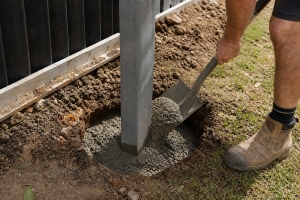
In construction, rapid set concrete is often used for posts, clotheslines, letterboxes, light footings, small repairs, landscaping projects rather than large conventional slabs or heavily engineered pours.
Are there different types of rapid set concrete?
Yes. In Australia, there are standard rapid set concretes and higher-strength rapid set products. Standard products are often marketed for non-structural or light footing jobs, while higher-performance options are promoted for more demanding installations.
Some products are designed mainly for quick, light-duty work, while others aim to combine fast setting with significantly higher compressive strength. When choosing rapid set concrete, remember to ask what strength and application the specific product is designed for.
How does it concrete work?
Rapid set concrete works by using a cementitious blend with additives that accelerate the setting and hardening processes. In practical terms, that means the concrete starts stiffening quickly after water is added – much quicker than conventional concrete mixes.
Some rapid set products work within 1 hour, while other higher-strength options even set in 30 minutes.
Are there any disadvantages to using it?
It might sound strange, but the main disadvantage is the short working time. Because it sets quickly, you have less time to position posts, adjust levels, fix alignment, or correct mistakes. You should be prepared to complete the project quickly as the material hardens rapidly.
Another disadvantage is that standard rapid set products are often not intended for structural applications as most products clearly state: FOR NON-STRUCTURAL APPLICATIONS ONLY. That means the convenience of fast set does not automatically make it the right choice for slabs, beams, or heavily loaded elements.
Lastly, rapid set mixes are also less forgiving of temperature and water control. Extreme temperatures can affect set time. Product sheets further warn that too much water reduces ultimate strength, so the installer has less margin for error than with a slower, more adjustable mix.
Is rapid set as strong as normal concrete?
Sometimes, but not always. It depends on the product and the application.
Rapid set concrete is designed to harden quickly, but that does not automatically mean it will match the strength of normal concrete in every case. Some standard rapid set products are intended for smaller non-structural jobs like posts, letterboxes, and light footings, while other higher-performance rapid set mixes are formulated to achieve much higher final strengths.
In simple terms, rapid set concrete can be strong enough for many common jobs, but it should not be assumed to have the same strength as normal concrete. The best way to compare the two is by checking the specified compressive strength and the intended use of the mix.
How much concrete does a 20kg bag of rapid set make?
A 20kg bag of rapid set concrete in Australia commonly yields about 0.009–0.01 m³, which is about 9–10 litres of mixed concrete. Swan Cement states that one 20kg bag makes 0.009 m³ or 9 litres, while Easy Mix states a volume yield of 0.01 m³ per 20kg bag. Cement Australia’s PROSTRENGTH® rapid set data also says approximately 110 bags are required per cubic metre, which works out to roughly 0.0091 m³ per bag.
So if you are estimating quantities, a safe practical rule is that one 20kg bag gives you about 9 to 10 litres of finished concrete, depending on the product and water addition.
How long does rapid set concrete take to cure?
Rapid set concrete hardens much faster than normal concrete, but full curing still takes longer than the initial set.
In many cases, rapid set concrete begins to firm up within minutes and can hold posts or light installations relatively quickly. However, early hardening is not the same as full strength. Like other cement-based products, rapid set concrete continues to cure and gain strength over time.
A good general way to explain it is that rapid set concrete sets quickly for faster installation, but it still needs days to build strength properly to reach its full cured performance. The exact timing depends on the product, weather conditions, water content, and the size of the job.
Learn more about how long cement takes to dry, set and cure here.
Conclusion
Rapid set concrete in Australia is best thought of as a fast, convenient bagged concrete for posts, light footings, repairs, and similar small jobs where early hardening is useful.
Also be sure to read our article on how to calculate the number of bags of cement you need.
If you are unsure whether rapid set concrete is the right choice, don’t hesitate to contact our sales team and they’ll assist you in order the correct one.
Phone: (08) 9399 3276