
Page 2 - SBP Perth Blog
-
- April 23, 2026
What is a roof fascia?
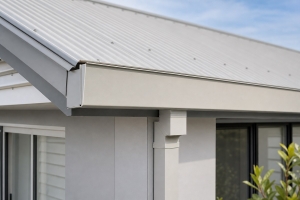
A fascia is the long horizontal board or metal section fixed along the edge of the roof, usually where the gutter is attached. It forms the outer facade of the roofline, creating a neat, finished edge between the roof and the walls of the home.
As you can see from the image above, it forms part of roofing and guttering system. In this guide, we’ll answer all your questions regarding roof fascia’s including Colorbond types, costs, replacement and more.
What does fascia look like?
Fascia usually appears as a straight band running along the lower edge of the roof. On many homes, it sits directly behind the gutter, so it might not always be in full view from ground level.
What is the most common material for fascia?
Fascia’s come in different materials and styles from smooth and modern to more traditional and decorative. The most common fascia materials used include timber and steel.
Older homes often have timber fascia, while many newer or modern homes tend to use prefinished
-
- April 18, 2026
A Colorbond downpipe is a rainwater pipe made from genuine COLORBOND® steel that carries water from the roof gutter down to the stormwater system or another drainage point. While many people associate COLORBOND® steel with roofing and fencing, it also offers a range of products for gutters, fascia and downpipes as part of a complete exterior drainage system.
What is the purpose of a downpipe?
The job of a downpipe is to direct rainwater away from the roofline and control where that water ends up. Without an effective downpipe system, water can overflow from gutters and end up around walls, footings, paving, and garden beds, increasing the risk of stormwater damage and erosion. That is why gutters and downpipes are usually treated as one connected system rather than separate products.
Is a downpipe part of guttering?
A downpipe is not the gutter itself, but it is part of the home’s guttering or roof drainage system. Gutters collect the rainwater running off the roof, while downpipes
-
- April 17, 2026
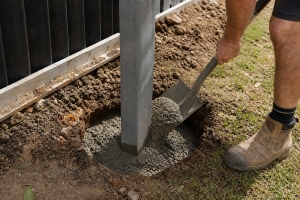
Yes, often you can, especially if it’s a straight run on level ground, you are confident with set-out and concrete footings, and you have already checked for underground services.
Installing a fence with slopes, corners, tight boundaries, gates, retaining work, or compliance requirements is something completely different. Here, even small mistakes matter and can end up costing you more if not done right. In these circumstances, it is usually best to hire a professional fence installer.
How long does it take to put up a Colorbond fence?
For a standard residential job, it can take anywhere from one to three days, but the timeline depends heavily on fence length, ground conditions, access, old fence removal, and whether extra reinforcement or gates are involved.
A simple boundary fence on flat ground is obviously quicker than a project on a sloping block or a site that needs demolition, retaining work, or extra preparation. Also keep in mind, a professional crew will probably work much
-
- April 16, 2026
Colorbond fencing is one of the most popular fencing choices in Australia. It offers a clean, modern look, good privacy, low maintenance, and fits the Australian climate. Genuine COLORBOND® steel fencing is made by BlueScope, comes in a wide range of colours and profiles and looks good on both sides.
How much is a Colorbond fence?
It depends on whether you are pricing materials only or supply and installation. At Statewide Building Products, our Colorbond fence panel kits currently range from $90.89 for a 900 x 2365 mm panel, $127.56 for a 1500 x 2365 mm panel, $145.97 for a 1800 x 2365 mm panel, and $164.43 for a 2100 x 2365 mm panel. That works out to roughly $78–$101 per linear metre in material cost, depending on the panel width used.
Each fence panel kit includes:2 x Fence Posts
2 x Fence Rails
2 x Fence Sheets
15 x Fence Teks
For a full project, installation pricing varies depending on the site. Based on current our panel kit pricing and average Perth fencing prices, a straightforward
-
- April 09, 2026
There are many different laundry doors to consider, here are some and when they are best utilized.
#1: Standard hinged laundry door
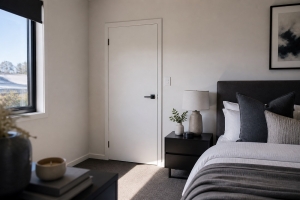
This is the most common laundry room door: a single swing door opens in or out.
Why use it
-
simple, cost-effective and easy to source
-
works with most homes and floor plans
- good acoustic separation
- easy to fit with locks, handles, latches and seals
When not to use it
- if the laundry is very small
- if the door swing clashes with benches, tubs or appliances
- if the laundry is in a hallway and clearance is limited
#2: Glass laundry door
A glass laundry door includes clear, frosted, etched, half-glazed or full-glazed panels. This also covers a laundry door with window, laundry door with glass panel, half glass laundry door or a double-glazed laundry door.
Why use it
- allows natural light into a laundry space
- makes tight spaces feel larger
- works well in modern designs
- can visually connect indoor and outdoor areas
When not to use it
- if the laundry is messy and visible
-
-
- April 08, 2026
A laundry door is the door that closes off your laundry room and separates it from the rest of the house. In some homes it is a normal door, while In others it’s a sliding door, bifold door, barn door or even a cupboard-style door that hides the washer and dryer. As you can see, there are many options available to laundry doors. Here we’ll go through each of them and show you when they are good and when not.
Why have a laundry door?
A laundry door helps create a practical work zone for laundry and cleaning from the rest of the home. Here are some pros and cons to consider.
Pros of having a laundry door
A laundry door can be of great benefit to any household. It can help:
- hide appliances like washing machines, dryers, freezers and even cleaning products
- tidy up the entire house by keeping laundry and mess in one location
- reduce noise from washing machines and dryers
- contain heat, moisture and odors
Cons of having a laundry door
In general, there are very few cons regarding having a laundry
-
- April 06, 2026
Rebar grades can be confusing because different countries use different naming systems. The grade of rebar tells you how strong the reinforcing steel is and how much stress it can handle before it starts to deform. If you are reading plans, pricing reinforcement, or comparing overseas and Australian specifications, it helps to understand what these grade labels mean.
What grade of steel is rebar?
For rebar or reinforcing steel, its grade refers to its yield strength. It tells you how strong the reinforcing bar is and what it is suitable for in structural design. Higher grade steel can carry more stress before it deforms.
In Australia, reinforcement is generally specified to Australian and New Zealand standards with modern deformed bars commonly at high-strength grades. On Australian drawings, you will often see notations such as N12, N16, depending on the drawing style and specification.
What is grade 60 rebar?
Grade 60 rebar is a common US designation. It means the steel has a minimum
-
- April 04, 2026
Estimating rebar quantity correctly is one of the most important parts of pricing and planning a concrete job. If you underestimate, the pour can be delayed while you wait for more steel from your building products supplier. If you overestimate, you spend more money than you have to.
The overall process is as follows: You work out the bar layout, calculate how many bars are required in each direction, allow for laps, bends and wastage, and then convert the total length into weight if needed for ordering or costing.
This guide shows you exactly how to calculate rebar quantity in a slab. Let’s get into the details below.
What is rebar?
Rebar is reinforcing steel placed inside concrete to help the concrete resist tension, shrinkage cracking, and structural loads. Concrete is strong in compression, but weak in tension. Reinforcement is used to give the slab, footing, beam, or wall the strength it needs.
See all our rebar products for sale here.
How to calculate the rebar quantity in slab
-
- April 03, 2026
Plasterboard thickness in Australia depends on where it’s installed. Walls vs ceilings, framing spacing, impact resistance, acoustic performance, fire performance, moisture resistance – all these variables will influence thickness.
In most residential work, you will commonly see 10 mm and 13 mm boards, with thicker options used where the system requires it.
What thickness is plasterboard
Here’s a practical guide to the plasterboard thicknesses:
Thickness Typical use Notes 6.5 mm Curved work Flexible boards are commonly made in thinner sizes. 10 mm Residential walls, ceilings Standard thickness for homes, but ceiling suitability depends on framing and product type. 13 mm Walls and ceilings where extra strength is needed Often used in commercial work and in systems needing a more robust lining. 16 mm Fire, acoustic, or high-durability systems Used when the wall or ceiling system calls for it. How thick is standard plasterboard
Standard plasterboard such as those being sold on our online
-
- April 02, 2026
Plasterboard is one of the most common lining materials used in modern construction because it is fast to install, cost-effective, and produces a smooth surface ready for painting and finishing. It’s used in most homes and many commercial buildings in Australia for internal walls, ceilings, and partitions. It’s also often called drywall, gypsum board, or wall lining the trade you are in.
Plasterboard is also popular because it’s a very consistent product. Instead of traditional wet plastering, plasterboard sheets can be fixed to framing quickly. This approach is the basis of most modern internal linings.
What is a plasterboard, and what does it look like?
A plasterboard sheet looks like a flat panel with a smooth paper face. Colour can vary by product while most boards are light grey or off-white. Moisture-resistant or fire-rated ranges can have different colors, depending on the manufacturer.
Most boards have:
- a gypsum core which is the plaster
- paper liners on the front and back
- factory